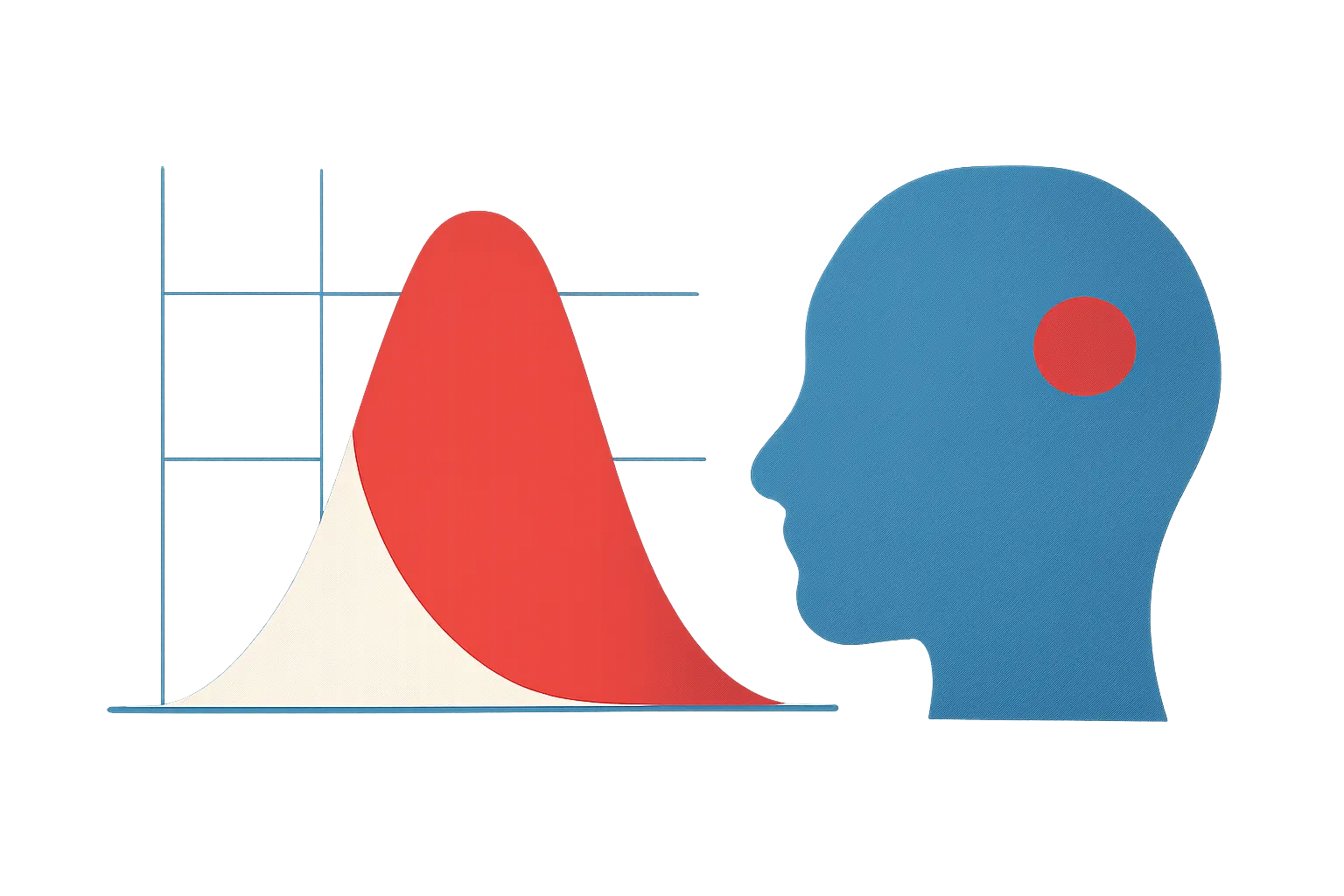
The problem: a single parameter is not enough
A single calibration parameter may fail to reproduce a physical response across the entire context domain because of model discrepancy. This is the starting point of the work published on arXiv, which also addresses the weight of uncertainties in observations and contexts, to be accounted for and quantified. The proposal is not a single parameter but a family of localized posteriors, constructed by weighting observation likelihoods according to their proximity to a target context.
How localization works
Gaussian localization weights incorporate context uncertainty via covariance inflation, with reflection at domain boundaries and an optional correction for non-uniform context sampling. A conditional normalizing flow approximates this family of posteriors through amortized variational inference. Integrating the localized posteriors under a prescribed context measure yields the marginalized parameter distribution.
In the first twin experiment, based on the Branin-Hoo model, the authors compare global and localized inference with uniform and asymmetric context distributions. According to the text, localization reduces the reported aggregate predictive errors relative to the global posterior.
Application to ocean turbulence
The second experiment concerns the k-epsilon turbulence closure in a single-column ocean model, with surface atmospheric forcing used as the context. In this case, calibration with a localized posterior reduces temperature and zonal velocity errors compared with both deterministic calibration and global-posterior calibration. The material specifies that both twin experiments are constructed to allow for local compensation.
The stated relevance lies in the joint treatment of discrepancy and uncertainty: instead of seeking a compromise valid everywhere, the method allows that the optimal calibration changes with context and quantifies the effect through a marginal distribution. Generality beyond the two cases studied and behavior on more complex context domains remain to be verified, aspects that the provided material does not clarify.
