The agreement and the timeline
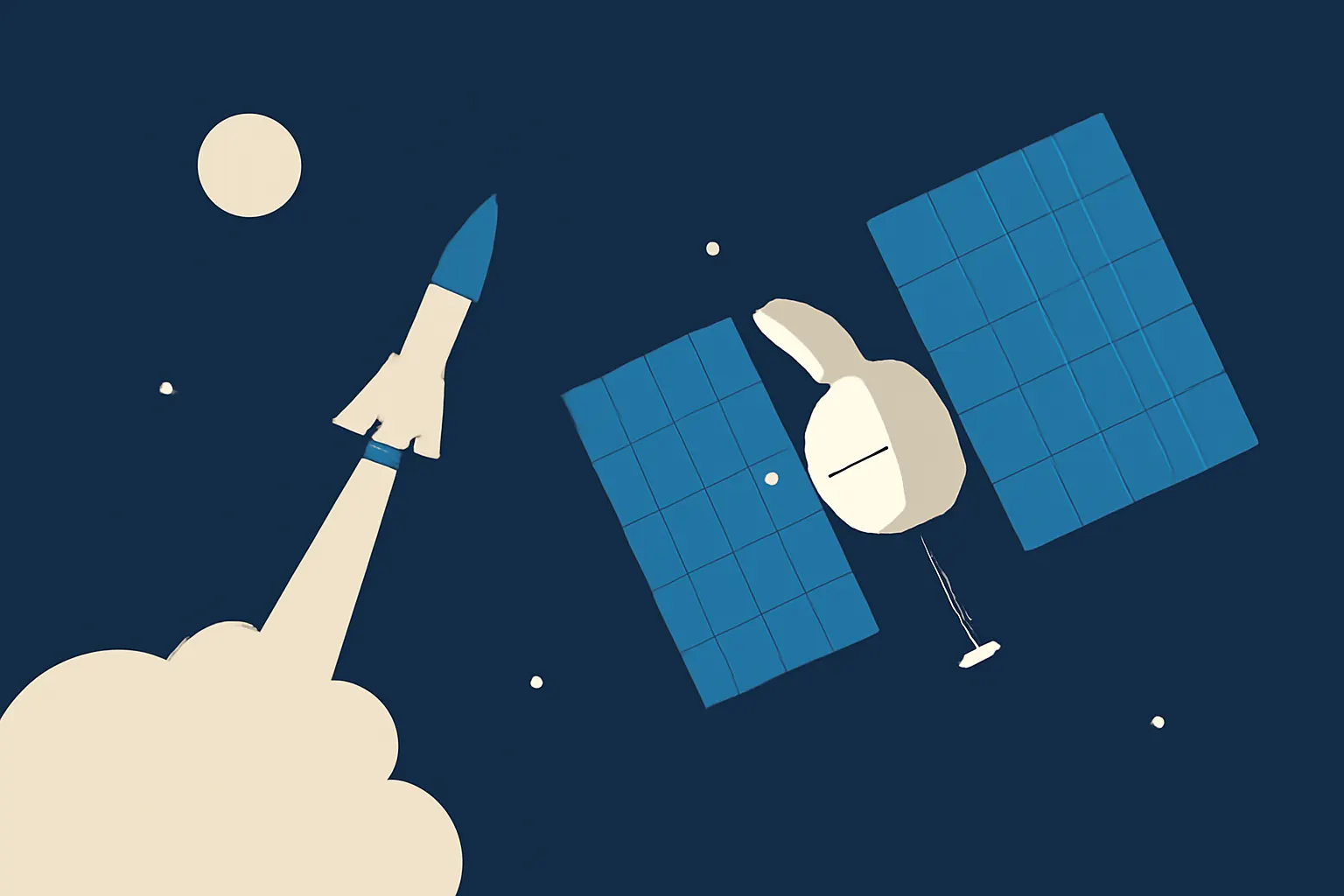
Google and Blue Origin have reached an agreement to place a satellite equipped with Google tensor processing units (TPUs) into orbit. According to a report by IT之家, the launch is scheduled for the first quarter of 2029 and will be carried out with Blue Origin's New Glenn rocket. The satellite's computing capacity is described as roughly equivalent to that of an entire data-center rack.
The information is attributed to the source and concerns exclusively the terms of the agreement: the indicated date is a target, not a schedule already confirmed by independent verification. The material does not specify the number of satellites planned, the cost of the operation, or the technical details of the payload.
The context: the "Sun Catcher" project
The agreement is part of "Sun Catcher," the program through which Google intends to explore the possibility of building data centers for artificial intelligence in space. The news thus clarifies the strategic picture: this is not an isolated launch, but one piece of a broader experiment announced by the company.
The most significant point is the leap in scale compared with previous phases. According to the source, Google already placed a first satellite with AI servers in orbit in October 2025 and successfully started the TPU aboard. On that occasion, the Gemma 4 model, running on the satellite, generated a verse composition and transmitted it to Earth. The shift from a single test satellite to a payload comparable to a data-center rack therefore marks an attempt to verify whether the infrastructure can handle larger computing volumes.
Why it matters and what remains to be verified
The significance of the initiative lies in the prospect of moving part of AI computing outside terrestrial data centers, a hypothesis that the material presents as exploratory rather than as an operational solution. The comparison between the two available elements—the October test with a single TPU and the 2029 launch with capacity compared to a rack—suggests a gradual path, but provides no information on energy efficiency, latency in communications with Earth, or costs, all of which remain to be clarified.
A distinction must be drawn between what is confirmed and what is stated: the existence of the agreement and the launch window are presented as facts, while the comparison with a data-center rack is a description of capacity that would need to be verified with technical specifications. The text does not report statements from representatives of the two companies, nor details on any subsequent phases of the program. The real scope of the "Sun Catcher" project and its economic and technical sustainability therefore remain open questions, to be followed in upcoming announcements.
