The pilot project
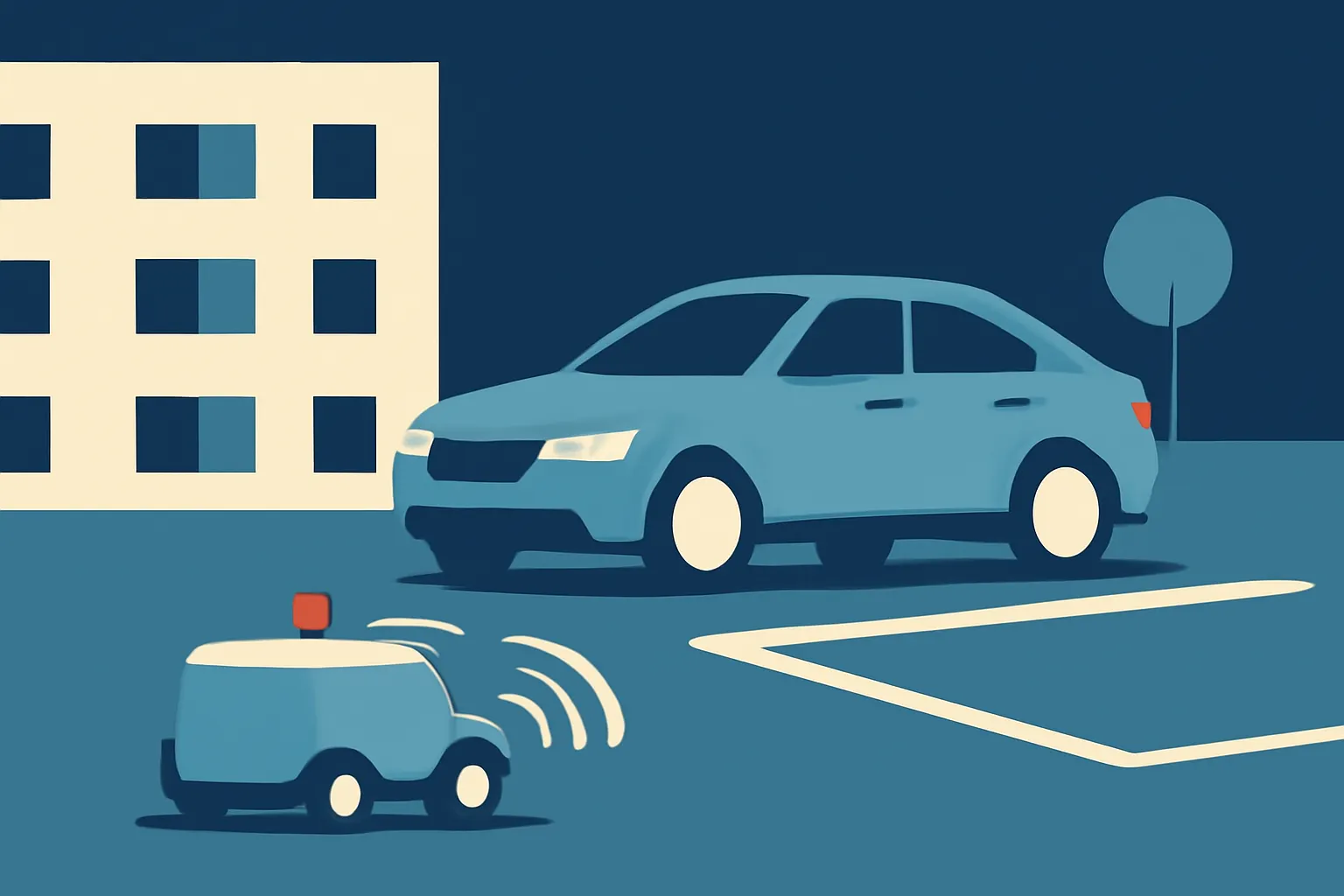
Hyundai Motor Group on Thursday presented a demonstration of parking robots capable of moving and rearranging vehicles within parking spaces without human intervention, according to a report by the Korea Herald. The test is part of a pilot project led by a consortium comprising Hyundai Motor, Hyundai Wia and Hyundai Engineering & Construction.
According to the source, this is the first project in Korea to use parking robots across more than 50 parking spaces within a residential complex that is actually in use. The distinctive element is therefore not the robot itself, but its large-scale application in a real residential setting rather than a demonstration environment.
How it works and what changes for residents
Residents can request that their car be moved via wall panels installed in the apartments, issuing instructions that include transferring the vehicle to designated pickup areas. The robots are also capable of lifting and repositioning cars parked in double rows, a measure designed to reduce parking congestion.
The group has integrated the robots with the smart infrastructure of residential complexes and has developed a parking management system capable of controlling up to 200 robots simultaneously. This detail indicates that the architecture is designed for centralized management at scale, not for individual isolated devices.
Prospects and open questions
Hyundai Motor Group plans to extend the technology to transport hubs, commercial properties and public facilities, and is exploring regulatory changes to encourage broader adoption. Jung Ho-geun, Vice President of Hyundai Motor's Future Strategy Division, said that the pilot project demonstrates the potential of parking robots and represents a step toward applying robotics and mobility technologies in real urban environments, with the goal of transforming parking lots into smart-city hubs connecting people, mobility, robots and urban infrastructure.
The material, however, does not clarify some relevant aspects: it does not indicate costs, installation times, results measured in terms of efficiency or incident rates, nor the content of the regulatory changes under study. The conditions for commercial rollout and guarantees of operational safety in crowded settings therefore remain to be verified.
Context
The news should be read as an announced and demonstrated trial, not as a service already available on a large scale. The choice to start with a real residential complex with more than 50 parking spaces is the most concrete data point provided by the source and constitutes the main novel element compared with purely technological demonstrations.
