A demonstrative opening, not merely symbolic
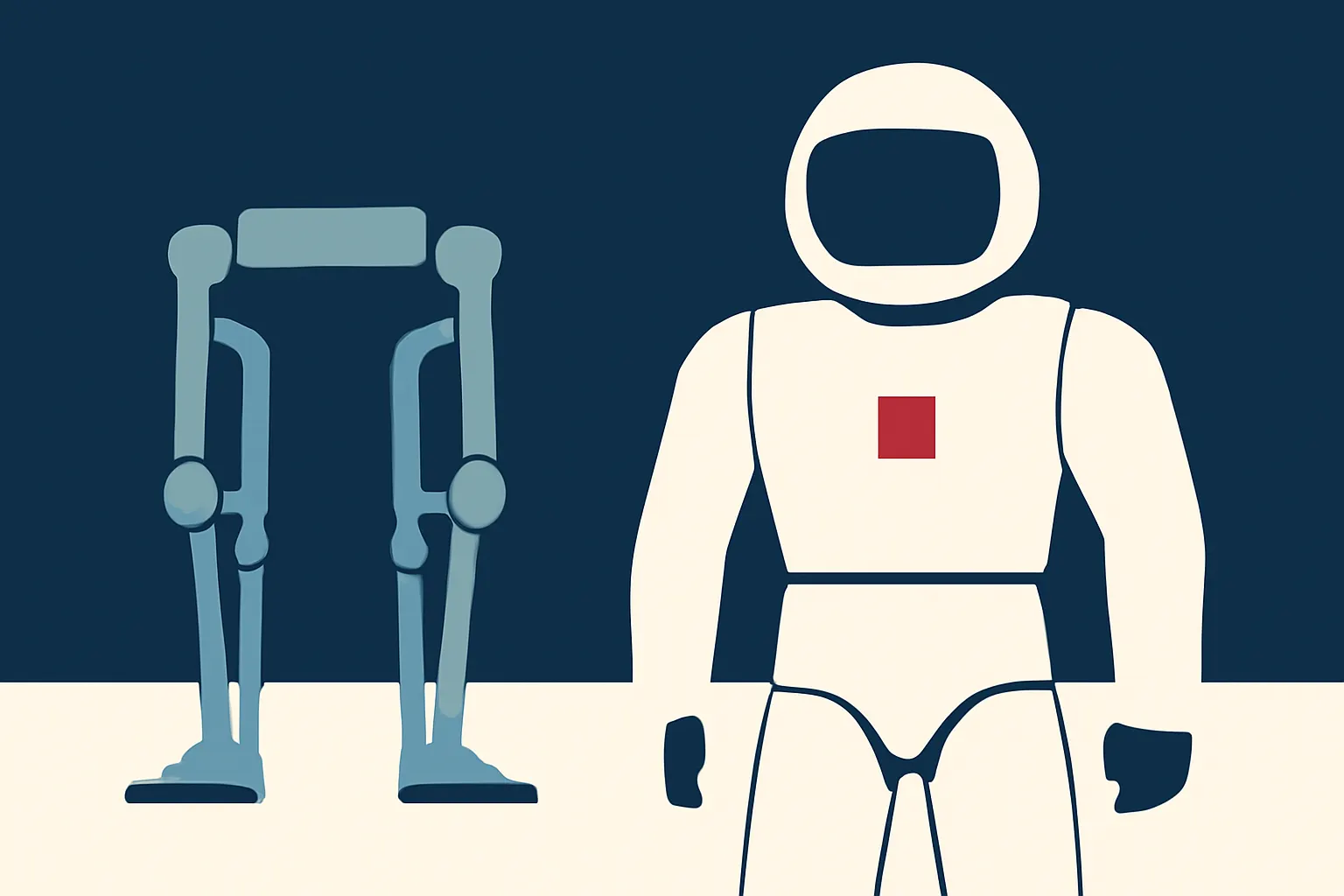
The tenth edition of Innovate Korea opened on Tuesday at KAIST's Ryu Keun-chul sports complex in Daejeon with two technology demonstrations that served as a prologue to the proceedings. University President Bae Choong-sik took part wearing an Iron Man-inspired robotic suit developed with the university's researchers and students. Beside him, researcher Kim Seung-hwan, who has paralysis of the lower limbs, demonstrated a wearable walking robot developed by the team led by Professor Kong Kyoung-chul. "Our goal is to use technology to help people move more freely and pursue the life they want," Bae said, according to The Korea Herald.
The forum is jointly organized by Herald Media Group, the Korea Advanced Institute of Science and Technology and the National Research Council of Science and Technology. The theme chosen for the 2026 edition is "NEXT 10 Years, You Are the Protagonist: Beyond AI, Humanity First," and the event drew about 5,000 participants, including students, researchers, industry executives and government officials.
Human values and national AI ambition
During the special 10th-anniversary discussion, moderated by TV personality Park Kyung-lim, Herald Media Group CEO and Publisher Choi Jin-young stressed the need to preserve human values in the face of rapid technological change. "Technology can open the way, but in the end it is people who walk it," Choi said, identifying empathy, reflection and critical thinking as necessary skills in the AI era.
Bae identified so-called physical AI—intelligent systems capable of interacting with the real world—as one of South Korea's main opportunities in the next decade, citing the country's strengths in manufacturing and robotics. The following panel session featured Ha Jung-woo, vice chair of the National AI Strategy Committee; Hong Won-wha, president of the National Research Foundation of Korea; Jin Yo-han, head of LG CNS's AI Center; and Yoon Kuk-jin, dean of KAIST's AI Graduate School.
According to the source's account, the speakers discussed the national ambition to place the country among the world's top three AI powers, along with challenges related to talent development, industrial adoption and equitable access to technology. These are stated goals, not results already achieved: the material does not document timelines, investments or benchmarks.
What remains open and how the forum closed
The forum closed with musical performances by Kim Junsu, Cha Ji-yeon, Jung Sun-ah, Ivy and Park Kang-hyun, accompanied by an orchestra conducted by Kim Moon-jung, with singer Kwon Eun-bi also taking part. The artistic and celebratory segment closed the event but does not replace the discussion of technology policy, which remains entrusted to the speakers' statements.
Several points remain to be verified: the material does not clarify which concrete initiatives emerge from the discussion, nor does it detail the technical features, costs or implementation timelines of the technologies presented, such as the KAIST president's robotic suit and the walking exoskeleton. It also does not indicate how speakers were selected or any commitments undertaken by the government. The figure of 5,000 participants is as reported by the source and is not accompanied by independent verification. The significance of the event, now in its tenth year, lies above all in the fact that universities, research bodies, industry and institutions are publicly discussing a ten-year agenda for AI and robotics: a basis for debate rather than a package of already defined measures.
