In the warehouse where hands still matter
At the Amazon distribution center near Luton, The Guardian reports, the system decides where to place each item, which box to use, and even how much tape to apply: according to the newspaper’s description, people provide the hands more than the brain. Amazon presents this setup as a “symphony of people and technology,” with robots and humans working in harmony, and maintains that the model maximizes what each does best. The guided tour, open to the public for a decade after criticism over working conditions, emphasizes competitive pay, pensions, dental coverage, and flexible hours.
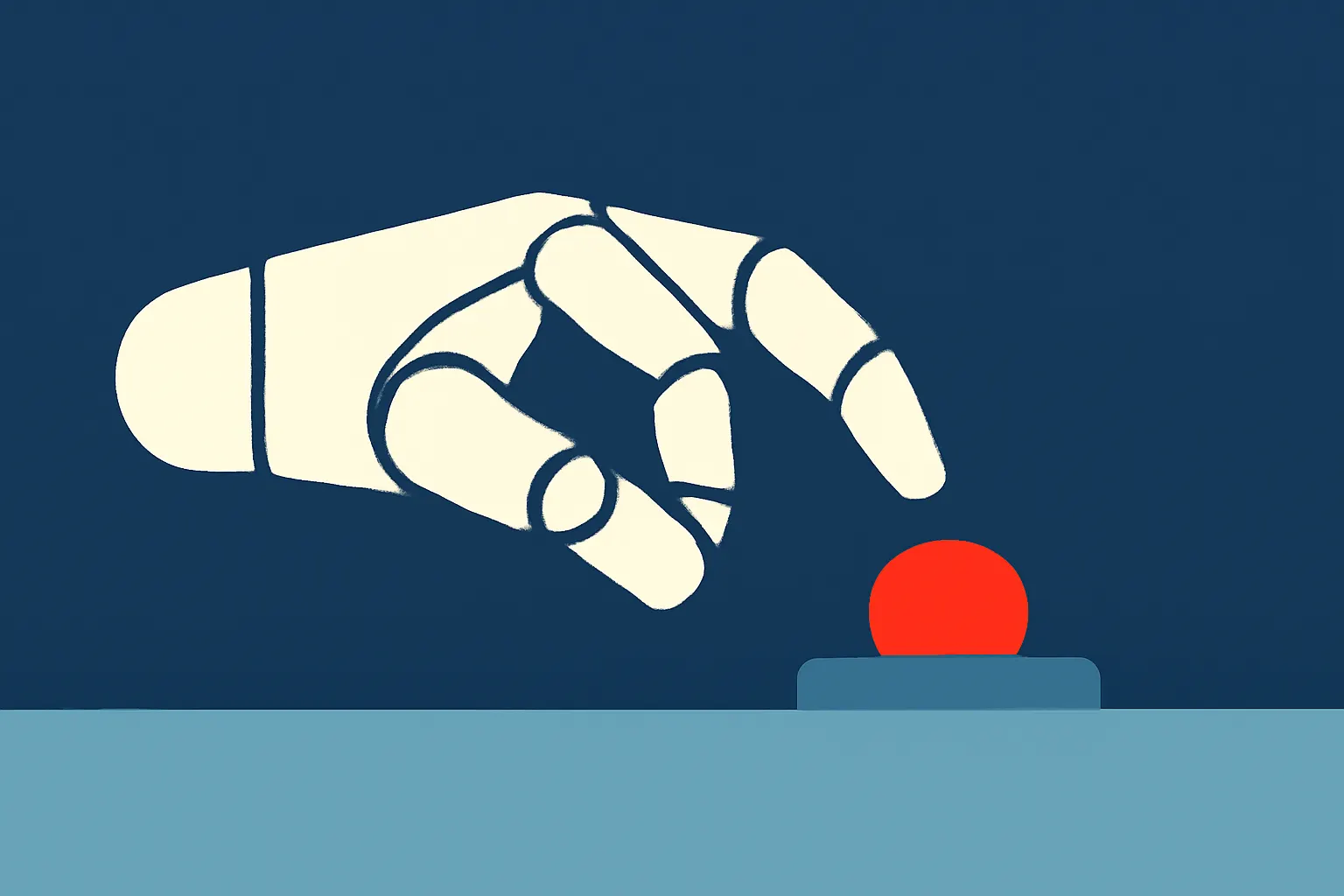
The point the article focuses on is that no current hardware or software equals a human hand: until robots are dexterous, human workers will remain necessary. Amazon employs more than 1.5 million people worldwide, but the account suggests that if a task could be performed more efficiently by a machine, the company would prefer to assign it to a robot.
Why a hand is so difficult to copy
Alistair Hunter, a hand and wrist surgeon at London’s university hospitals, tells The Guardian that the hand is the channel between the brain and the world, the way we turn thought into action. It has 27 bones, nerves, and muscles, but behind it is a brain that interacts millisecond by millisecond with what the hand perceives. According to Hunter, the human evolutionary advantage derives not only from intelligence but from the combination of cognitive power and dexterity: the larger thumb compared with other primates and the joint at its base enabled precision and power grips, and, three million years ago, the development of tools.
The difficulty for engineers lies in the combination of feedback and feedforward: specialized receptors detect vibrations, roughness, and skin tension, and the brain compares the data with expectations and recalibrates. Hunter estimates the feedback loop at about one-tenth of a second, but stresses that the hand can also predict, before a grasp, how much force is needed, as when picking a raspberry without crushing it. Replicating feedback and prediction simultaneously, with a model learned from experience, is the real obstacle: which is why robotics has focused on machines specialized for individual tasks. Hunter believes engineers will eventually succeed, but warns that building a computer capable of predicting the external world and returning the right amount of sensory information will be difficult.
Investment and open questions
The Guardian reports that investors are betting on humanoid robots destined to enter daily life like large language models. The Chinese government has promised more than £100 billion for robotics and high-tech industries over the next two decades; Tesla has suspended production of Model X and Model S to focus its factories on Optimus, and Elon Musk has said that for a general-purpose humanoid robot, “the hand problem must be solved.”
The consequence indicated by the article is that artificial dexterity and artificial intelligence together will have profound effects on work: if hands are replicated, no profession, not even manual ones, can consider itself safe. However, the timing and scale of this transition remain to be verified: dexterous machines do not yet exist, and the available material offers no data on costs, adoption, or already measured employment impacts. Amazon’s statements about working conditions come from its presentation during guided tours, while Hunter’s and Musk’s assessments are statements by experts and company leaders, not confirmed forecasts.
