Nvidia’s appeal to a manufacturing nation
Jensen Huang, Nvidia’s chief executive, urged German automotive and machinery companies to integrate artificial intelligence more quickly. He did so in Berlin during a meeting with Chancellor Friedrich Merz, according to the Associated Press. Huang argued that digital software will not replace physical production, but can help redesign products and industrial processes.
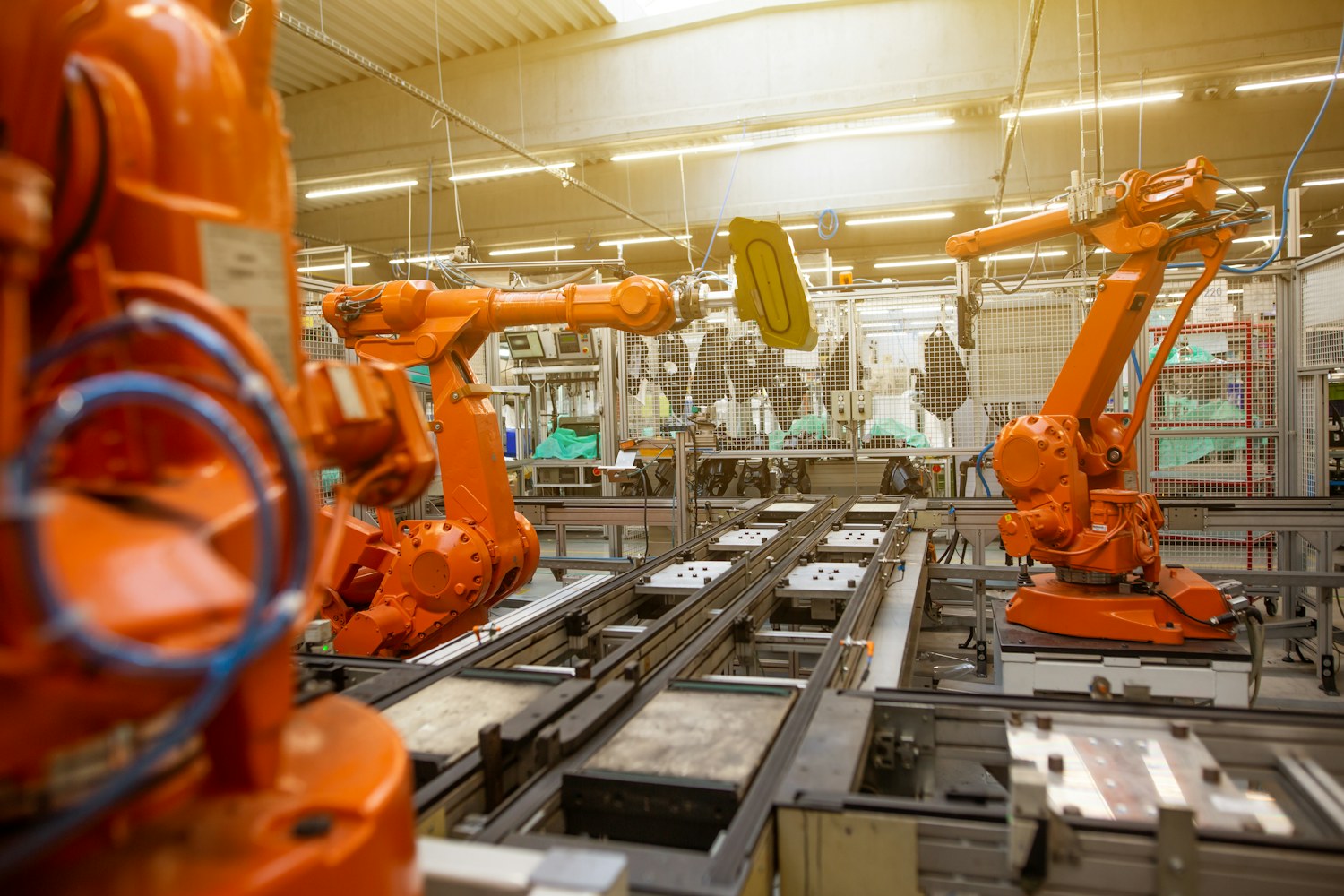
Germany is a significant testing ground because it brings together manufacturing companies, specialized suppliers and engineering expertise. Data from machines, sensors and production lines can feed predictive maintenance, quality control, simulations and robotics. But having data is not enough: quality, interoperability, access rules and systems capable of operating safely alongside people and machinery are required.
The road from demo to factory is a long one
Industrial applications must work under conditions different from those of a chat. A classification error can stop a line, damage a component or create a risk for workers. Before adoption, companies must verify reliability in controlled environments, behavior in the event of faulty sensors and the possibility of manual intervention. Generative AI systems used to design or assist staff also require validation procedures, because a plausible result is not necessarily correct.
So-called physical AI connects software models to robots, machines and real-world environments. For Nvidia, it is also a business opportunity: the company supplies chips and computing platforms that can support these systems. Huang’s call should therefore be read as an industrial proposal from a supplier with an interest in extending the use of its technology.
Competitive advantage depends on skills and infrastructure
Adoption requires investment in hardware, networking, security and training. Some processes can be managed locally to reduce latency or keep data inside the plant; others can rely on the cloud. The choice depends on confidentiality, maintenance, cost and continuity constraints. Companies must also establish who is responsible when an automated decision causes damage or a stoppage.
The CEO’s statements do not prove that German industry is already losing ground, nor that AI is a universal solution. Rather, they highlight the competitive pressure to invest and experiment. The result will be measured over time: reduced waste, greater flexibility, safety and verifiable productivity, not in the number of announced pilot projects.
