The new substrates agreement
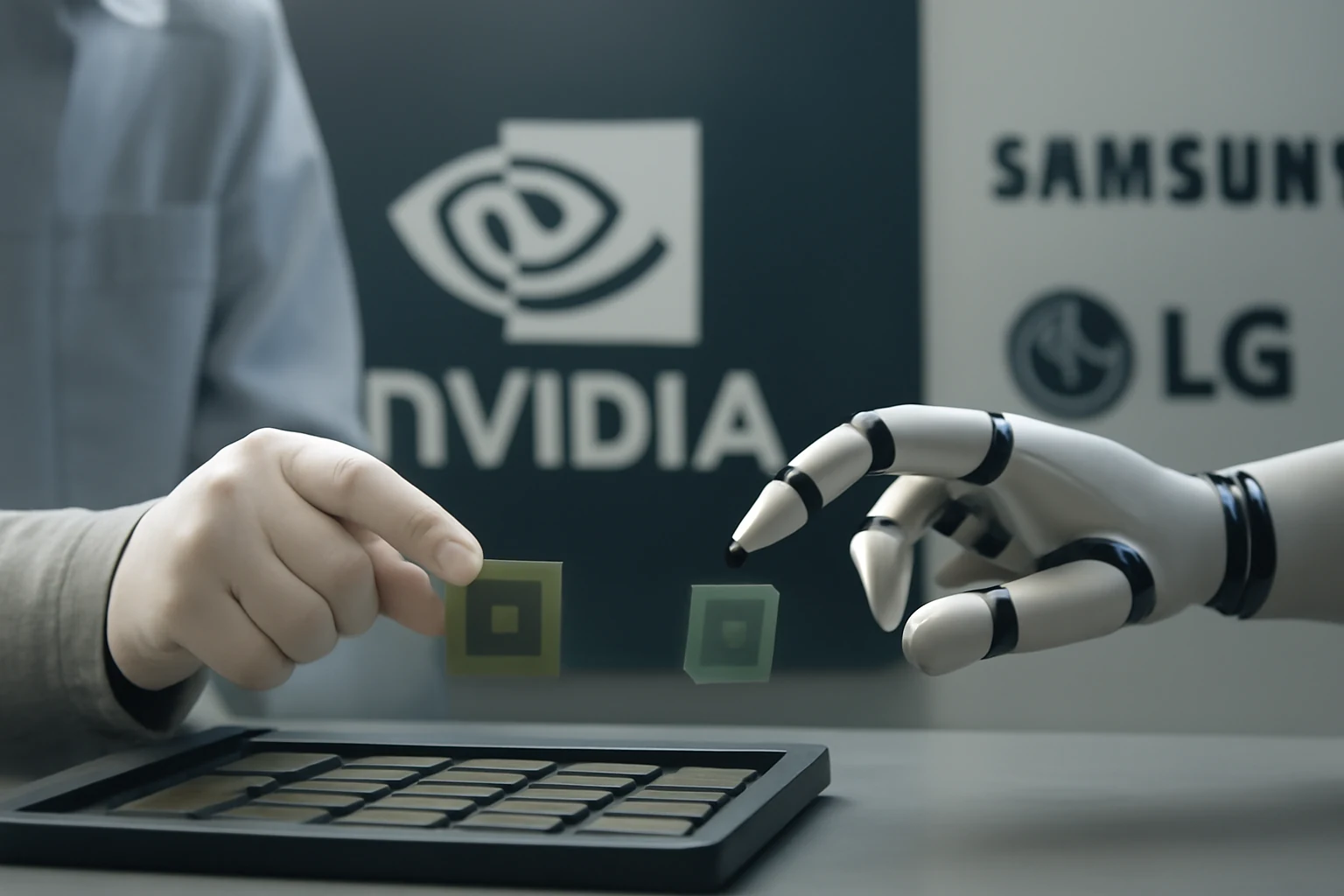
Samsung Electro-Mechanics announced on Wednesday a multi-year agreement to supply Nvidia with advanced semiconductor substrates for artificial intelligence processors and networking chips, according to The Korea Herald. The two companies will jointly invest in expanding production facilities in Sejong and Busan, with initial supplies expected as early as this year. The substrates, which provide the electrical connections between chips and circuit boards, will be used in AI computing processors and high-speed networking chips used in data centers.
Initial supply will run through existing Korean plants, while additional capacity is expected through facility upgrades and new production sites. The deal is part of Nvidia's effort to secure manufacturing capacity amid strong demand for AI computing infrastructure. The U.S. company said on Wednesday that agreements with Samsung Electro-Mechanics, Japan's Ibiden and Taiwan's Unimicron will help more than double—by a factor of 2.5—the production capacity for substrates for its products over three years. According to the source, by 2028 Nvidia-related production is expected to account for a significant share of Samsung Electro-Mechanics' total annual substrate capacity.
The push into robotics sensors
On the robotics front, LG Innotek said on Thursday that it is working with Nvidia to develop perception systems for humanoid robots. The company presented at GTC Berlin a 3-megapixel camera module and a multimodal vision system that integrates Nvidia's Holoscan Sensor Bridge technology, which allows sensors and cameras to send data directly to AI computing systems, enabling robots to process information about their surroundings more quickly.
LG Innotek plans to extend the collaboration to visual perception for humanoid robots and robotic hands, with next-generation solutions scheduled for demonstrations at CES and GTC in 2027. The move follows Nvidia's announcement of new tools for the Isaac robotics platform, including a reference platform for humanoid development. For LG Innotek, historically focused on smartphone camera modules, this is a further step toward autonomous driving and robotics, after its work with Boston Dynamics, a Hyundai Motor Group company, on robotic vision systems.
What remains to be clarified
The two agreements are different in nature. Samsung Electro-Mechanics' agreement is a multi-year supply arrangement with shared investment in production capacity; LG Innotek's is a development collaboration and, according to the source, does not involve confirmed purchase volumes or contract values tied to Nvidia. In the case of Samsung Electro-Mechanics, neither specific supply volumes nor financial terms were disclosed. The source also cites revenue for Samsung Electro-Mechanics' Package Solutions division: 771.6 billion won, about $583 million, in the second quarter, up 37 percent year on year, supported by demand for advanced substrates for AI accelerators and servers. The actual size of the orders, the timing for starting additional production and the economic impact of the two relationships therefore remain to be verified.
