Medical care guided by a search engine
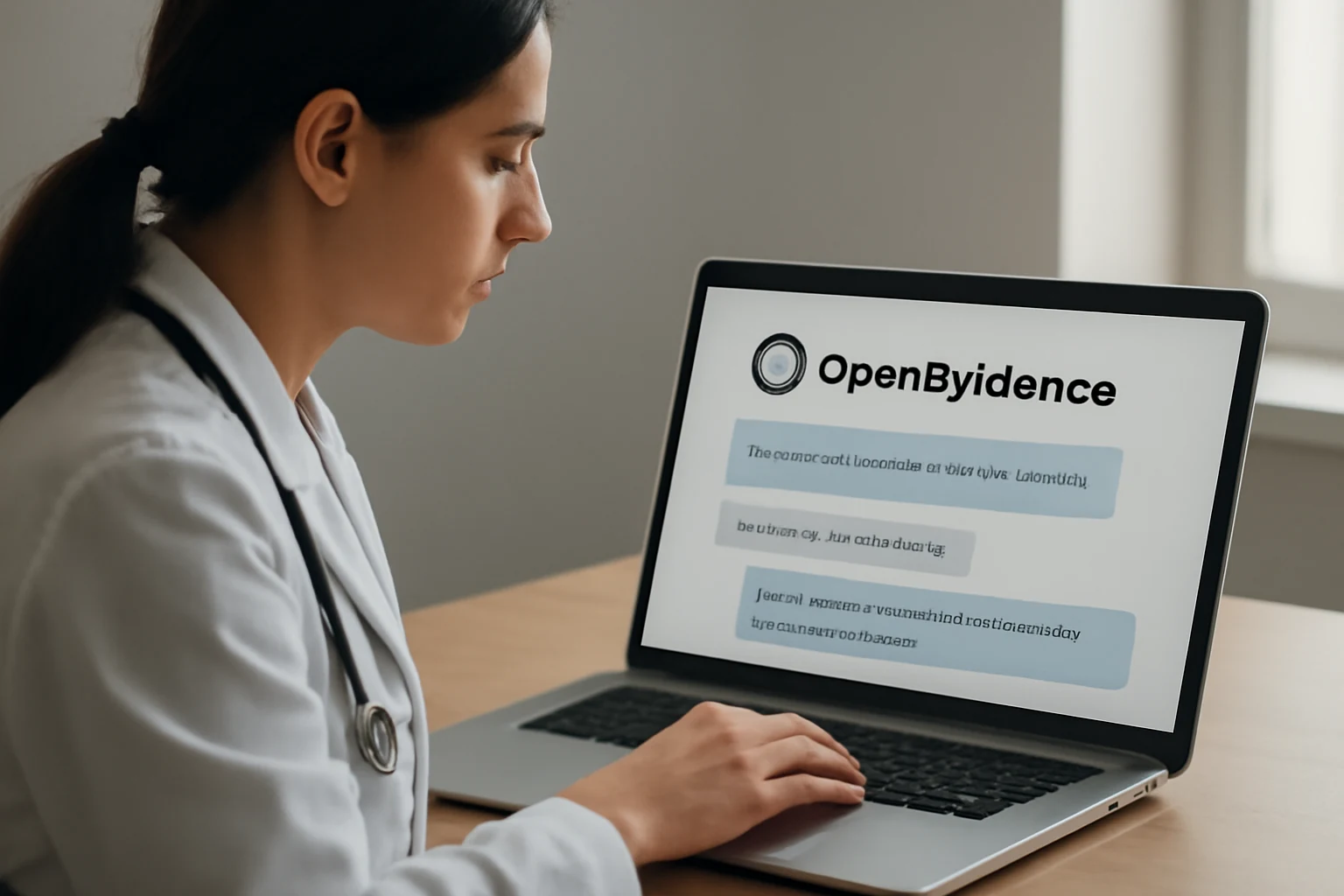
Nearly two-thirds of U.S. physicians turn to an artificial intelligence-based search engine to make patient decisions. That is according to the profile Ars Technica devotes to OpenEvidence, a Miami-based startup founded in 2022 by serial entrepreneur Daniel Nadler. According to the company, last month American physicians—out of a total of about one million—sent more than 42 million requests to the chatbot, which consults medical journals and clinical guidelines to assist with diagnosis and treatment.
The platform is supported by advertising and, according to the account, grew mainly through word of mouth, winning over a sector in which few similar tools have achieved comparable uptake. In an interview with the Financial Times, Nadler called it “the first viral consumer internet app in healthcare.” The service is built on a narrow list of sources, including peer-reviewed journals such as the New England Journal of Medicine and the Journal of the American Medical Association.
Investments, advertising revenue and hospital relationships
The material reports that over the past 18 months the company has raised nearly $1 billion from investors including Andreessen Horowitz, Blackstone, Thrive Capital and Sequoia; the latest round, in September, raised $250 million at a $15 billion valuation. As for revenue, a source close to the company indicated that at the end of 2025 OpenEvidence had booked $100 million in “advertising purchases”—a metric that includes current and future commitments—for the current year, and that it aims to generate between $400 million and $500 million through ads by the end of 2026.
Adoption by clinicians has led to formal integrations with health systems such as Mount Sinai Health System and Memorial Sloan Kettering Cancer Center in New York, which have incorporated the tool into electronic health records. Paul Testa, chief health informatics officer at NYU Langone, explained that the university chose a formal agreement after finding that physicians were already using the tool as a standalone resource, to ensure its safe use. The company is also expanding its offering into ambient documentation, that is, the transcription of patient interactions. According to the material, Nadler announced the launch of clinical trials in the coming weeks, with the stated goal of drug discovery based on scientific literature: “the economic value of this,” he said, “will exceed by orders of magnitude any fee we could charge hospitals or advertisers.”
Doubts about accuracy and competition
The rapid growth has, however, fueled debate. The material cites conflicting results: a Mayo Clinic study, which is also an investor in the startup, found that the system provided “accurate and evidence-based” recommendations in all five clinical cases examined, with a more limited impact on treatment decisions; an article published in June in Nature, by contrast, found performance inferior to generalist models such as Google’s Gemini and OpenAI’s GPT on clinical benchmarks. Neurosurgeon Eric Oermann of NYU Langone noted the scarcity of research on individual applications and the absence of guidelines on how to introduce them into clinical practice; there also remain concerns that younger physicians may rely excessively on these systems without first mastering foundational knowledge.
On the competitive front, OpenAI and Anthropic are pushing into the same territory, with the former having proposed ChatGPT for healthcare and the latter having released clinical tools, though it recently struck a partnership with OpenEvidence to bring them to 100 low- and middle-income countries. The company also chose to withdraw from the European Union and the United Kingdom at the beginning of the year because of the AI Act, slowing expansion in two key markets. Still to be verified are the figures declared by the company—users, requests and advertising revenue—reported by a source close to the company and not from public financial statements, as well as the tool’s actual clinical effectiveness, on which the available literature appears divided. Responding to skeptics, Nadler countered that the very fact that physicians choose and use the software “matters more” than benchmarks.
