What was shown and where
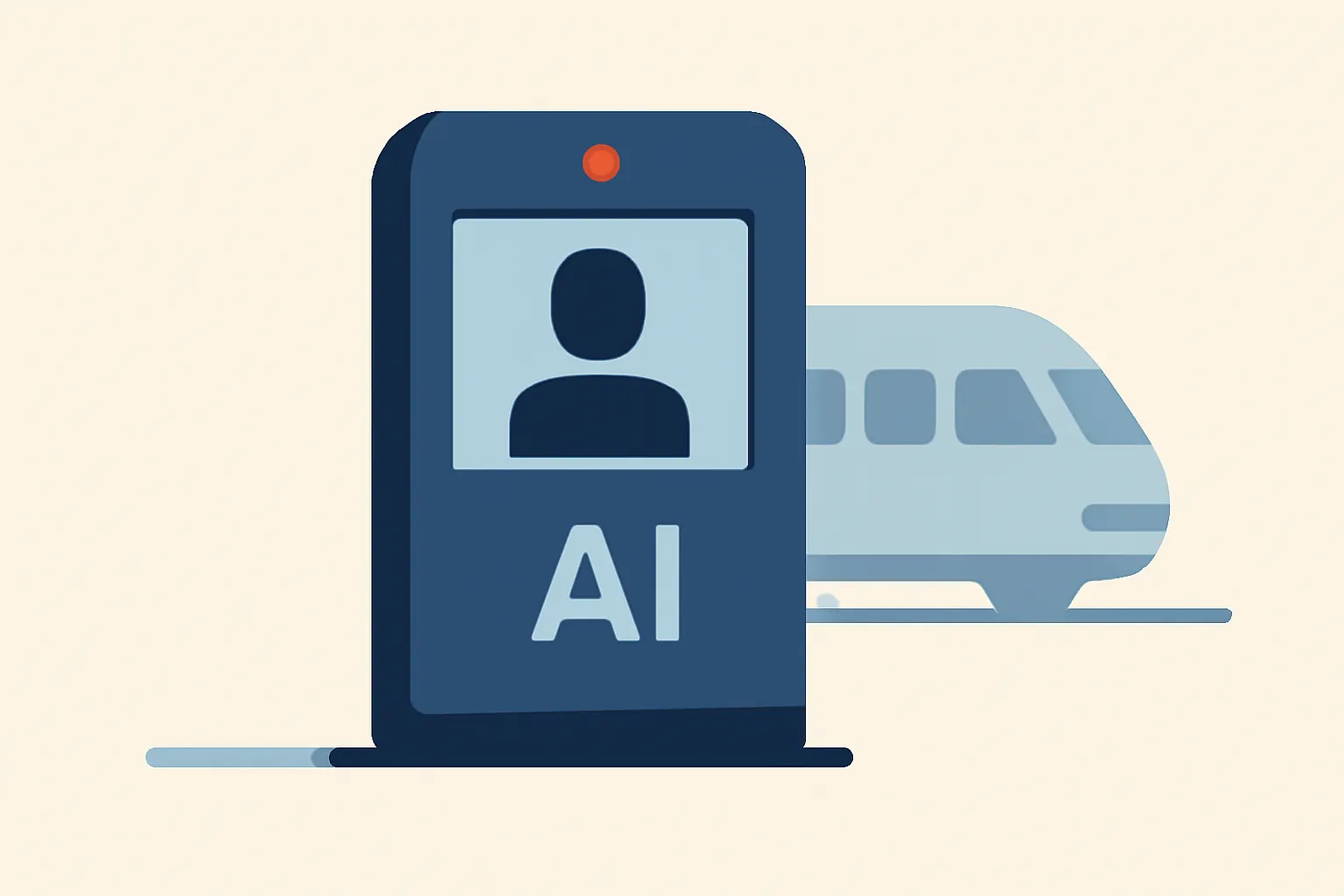
Safety Lab (세이프티랩) demonstrated a contactless biometric screening AI kiosk during the 2026 autumn congress of the Korean Society for Railway, held from the 29th to the 31st of last month on Jeju Island, at Phoenix Island. The report comes from ETNews, according to which CEO Lee Chul-woo personally presented the device to members of the scholarly society and to representatives of organizations linked to railways and transport.
During the event, the company also discussed the directions of technological development and how the system could be applied in the field, designed to identify risk signals in railway workers before the start of the shift.
How it works and what is left to the manager
The kiosk measures biological signals using rPPG technology, i.e., camera-based remote photoplethysmography, with no need for wearable sensors. This component is supplemented by sensors for volatile organic compounds (VOCs) and image analysis.
According to the description provided, the system does not autonomously decide whether a person is fit for work: it combines biological data, VOCs and behavioral indicators such as gaze and movement to identify signals requiring additional checking, leaving assessment and follow-up verification to the manager. AI is therefore presented as a support tool, not as a replacement for human judgment.
Development path and stated goals
Safety Lab is refining the product under the government program for the rapid commercialization of AI-based products, supported by the Ministry of Land, Infrastructure and Transport and the KAIA agency. The announced plan covers, together, the measurement environment, hardware, analysis models, centralized control, the data-learning system and field testing.
On the technical side, the company aims for a sunshade that reduces the effect of external light and reflections in order to standardize facial capture conditions; a new layout of cameras, sensors and VOC devices to guide gaze and measurement position; and a reduction in detection time from the current 20–25 seconds to under 15. On the analytics side, it plans to develop a multimodal model combining rPPG, biological signals, VOCs and behavioral patterns, with values classified into three levels: normal, caution and anomaly. TCN and 1D-CNN networks are cited for learning pulse-wave patterns and correcting noise caused by lighting and movement variations. Video analysis is expected to examine more than ten anomaly indicators linked to gaze and movement, while for VOCs the company intends to extend screening from alcohol to substances such as cannabis. A centralized control platform for multiple kiosks and an integrated data mart are also planned.
The statements and the limits of the information
Lee said the demonstration made it possible to verify the needs of the railway context and the aspects to examine in operational management, adding that the intention is to develop the system as a field safety tool capable of detecting risk signals early and supporting managers’ follow-up checks.
The material does not indicate quantitative results from the trial, nor adoption timelines, customers or data on the model’s accuracy and performance. The actual effectiveness of the announced measures, the handling of workers’ biometric data and the regulatory conditions for large-scale use therefore remain to be verified.
