The problem: different packs and high risks
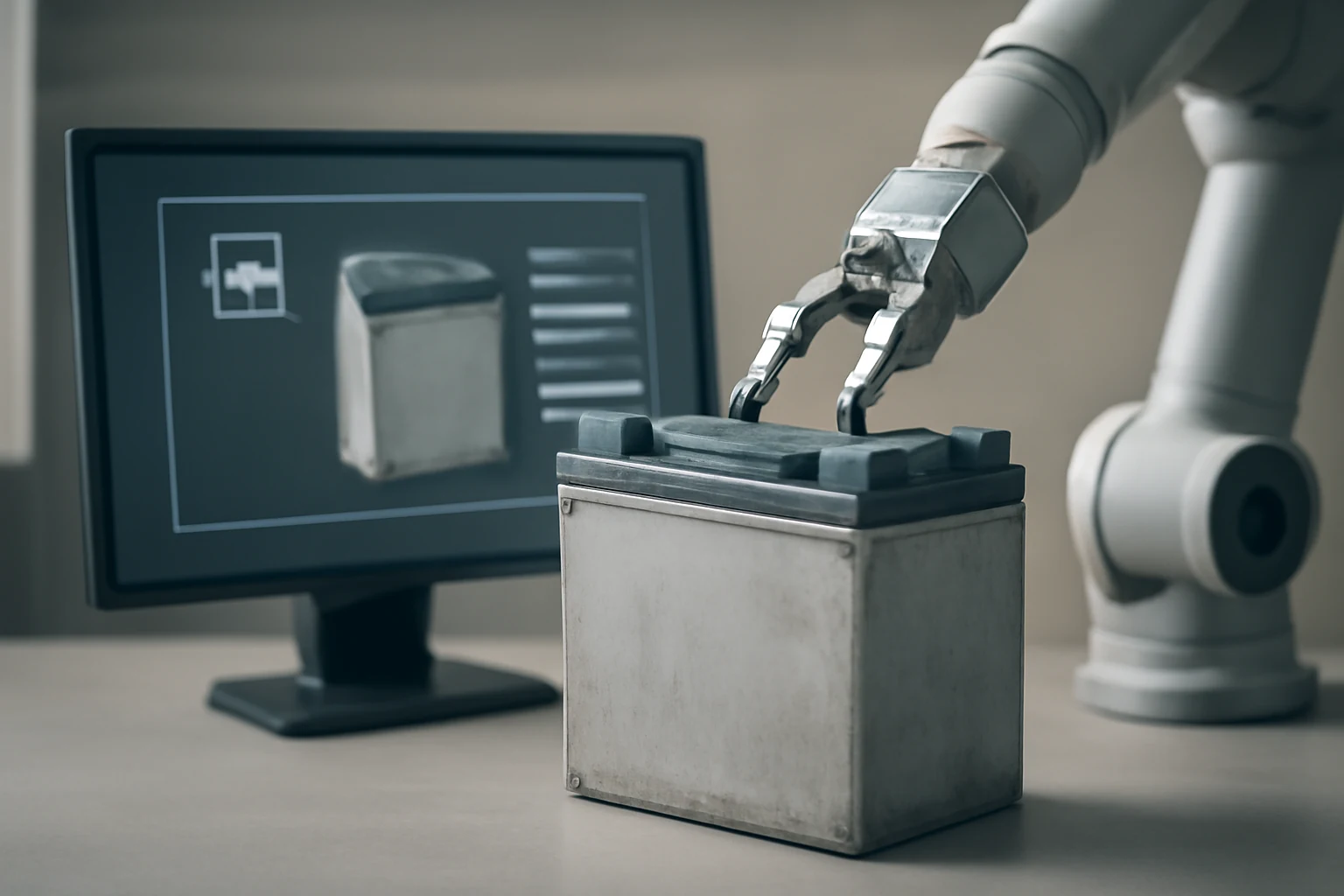
Batteries that come out of electric vehicles still retain energy and must be disassembled carefully to avoid electric shocks and fires. The work is complicated by the fact that every manufacturer and every model uses packs with different dimensions, shapes and positions of bolts and connectors: operators must select and change tools according to the structure. The South Korean company Dimillions, established from a Sungkyunkwan University laboratory and led by Han Yohan, has long been developing technologies that translate factory data into artificial intelligence decisions and plant actions, and now applies this approach specifically to used batteries.
According to the source, the critical point is not only recognizing components in images, but transforming the identified coordinates into robotic movements, automatic tool changes and subsequent operations. For this reason, the verification concerns the continuity of the entire cycle, not isolated functions.
How BATON works
The system is called BATON and covers the entire chain: pack intake, disassembly, state measurement, diagnostics, grade assignment and management of the processing history. The idea is that the information collected at one stage feeds the decisions of the next, so that the treatment of each individual battery remains tracked as a continuous data stream.
Dimillions is developing techniques based on 2D and 3D images and AI to identify the shape of the pack and the position of bolts and connectors, define the disassembly order and plan the robot's path. The stated goal is to reduce the time and effort required to reconfigure the robot when the manufacturer or model changes. The company is verifying continuity, safety and adaptability across different vehicles; disassembly times per pack and the automation rate are still being measured.
Diagnosis and digital identity of the battery
Disassembling is not enough: not all batteries are reusable. Dimillions is building a system that assesses voltage, internal resistance, available capacity, voltage differences between cells and behavior during charging and discharging, also integrating information recoverable from the battery management system and the usage history. The outcome should separate reusable batteries from those requiring additional checks or maintenance and from those destined for recycling.
A digital dossier is also planned for each battery, with status at entry, records of operations, measurement results and reasons for the assessment. The intent is to provide buyers for uses such as energy storage or two-wheel electric vehicles not only with the final grade but also with the evidence supporting it. The source stresses that the environmental benefits of reuse depend on the actual duration of use and on whether or not the battery is replaced with new batteries, and require verification covering transport, diagnostics and regeneration.
First installation and plans
The first BATON unit was installed at PM Energy Solution, which specializes in battery regeneration, where real packs are fed in to test robotic disassembly, measurement and diagnostics; the data collected serve to improve the management of different models and the assessment algorithms. The company aims to supply five units in Korea in 2027 and twenty in 2028, with subsequent expansion into the two-wheel electric vehicle battery market in Vietnam.
The project is part of Gyeonggi Province's 2026 program for climate tech startups, managed with the Gyeonggi Center for Creative Economy and Innovation, which supports the integration of visual recognition, robotic disassembly, automatic tool changing and diagnostics. The accuracy of assessments, processing times and level of automation remain to be confirmed. Han said the goal is to move operators away from handling high-voltage batteries, select reusable batteries more precisely and link their reuse and circularity.
