A different approach to image generation
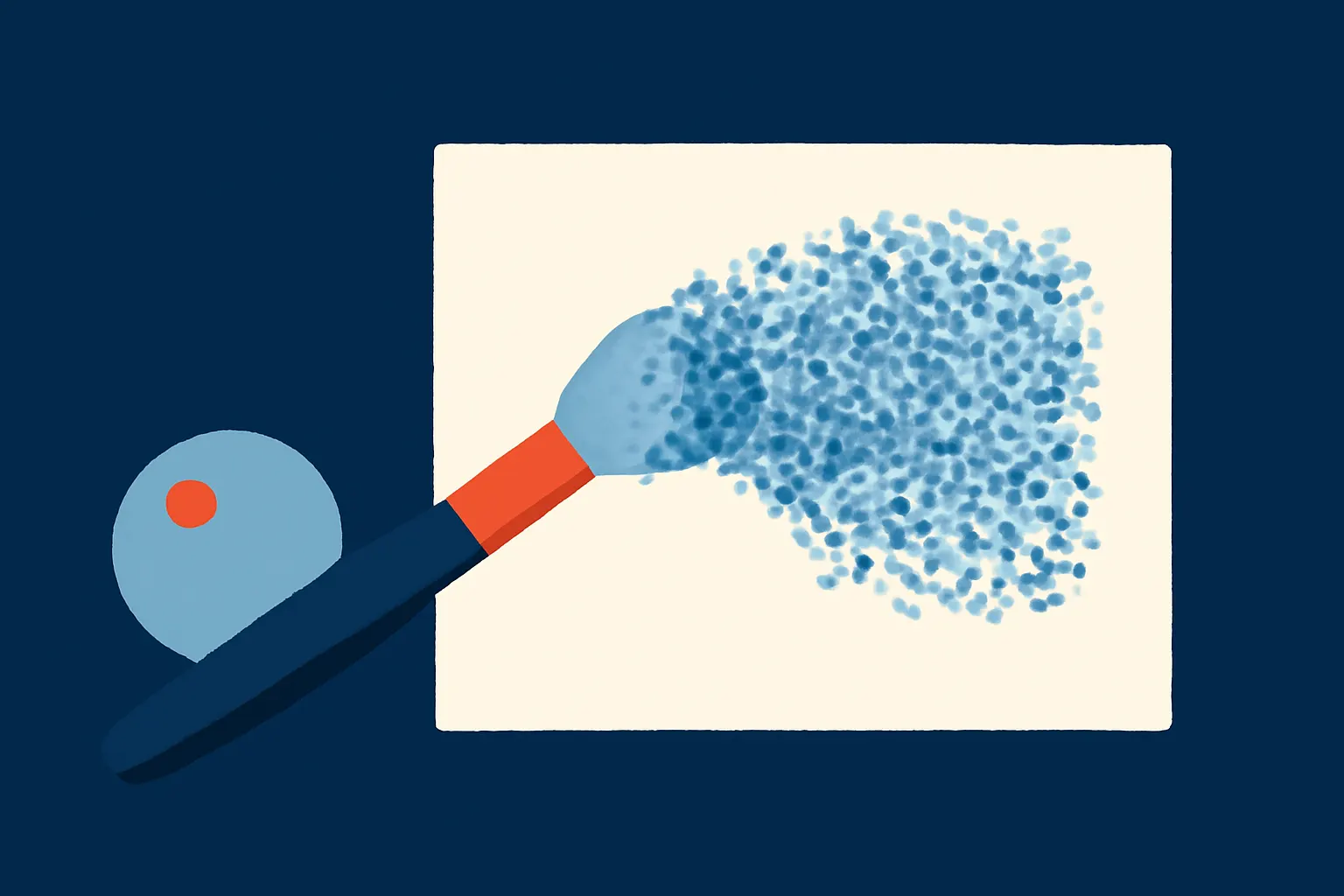
According to a report by The Decoder, Anthropic's new language model, Claude Fable 5.2, does not produce images like the diffusion systems used by models such as Midjourney, which start from a noisy image and progressively refine it. Fable 5.2 instead takes a different path: it simulates the physical process of painting, including the texture of the bristles, the way the color is deposited, and the mistakes that must then be covered up. The source attributes the description to Anthropic employees and to publicly shared experiments.
How the simulated painting engine works
Jake Eaton, an Anthropic employee, showed on X that, when asked for a painting as indistinguishable as possible from a photograph, Fable 5.2 created an image of a shopping cart in a parking lot using about 700,000 simulated brushstrokes. According to Eaton, Claude works without an external image model and without pre-rendered or traced source images: each work is a 1,000-2,000-line Python program that drives a simulated painting engine. The approach recalls agentic image editing, in which language models choose tools and evaluate the results.
A second experiment, shared by Anthropic engineer Michael Graczyk, concerned a bird at dawn: the model could use only code to simulate the physics of bristles, wet paint, and canvas, and had to specify each brushstroke as a coordinate, with no ability to undo strokes already made. The source specifies that the resulting video lasts 21 seconds and shows the construction of the painting starting from 111 brushstrokes.
Self-correction and limits in robotics
The source reports that, between one pass and the next, the model observes the canvas and reacts to its own mistakes as a painter would: when the bird's back came out too thin, the AI applied a firmer stroke, turning the scattered bristle marks into ruffled feathers. Eaton also reportedly had Fable 5.2 develop its own artistic personalities with fictional backstories and coherent styles, after criticism of previous attempts with the twin model Opus 5.5, which were accused of merely imitating existing art.
Anthropic maintains that the model's ability to plan step by step and self-correct under physical constraints is not limited to the virtual canvas: in internal tests, Fable 5.2 reportedly solved two open problems in black hole physics, designed three working electronic devices with circuit manufacturer Diode, and programmed a laptop operating system in eight days using more than 1,000 sub-agents. Researcher Aris Zhu tested the model with real robotic arms against OpenAI's GPT-6 Astra, but in the physical test Astra reportedly painted faster and has so far been the only one able to set up a domino. Anthropic reports a score of 64.9% for Fable 5.2 on its internal RoboDojo Sim benchmark, versus 29.8% for GPT-6 Astra.
