Speed as a limit to avoid
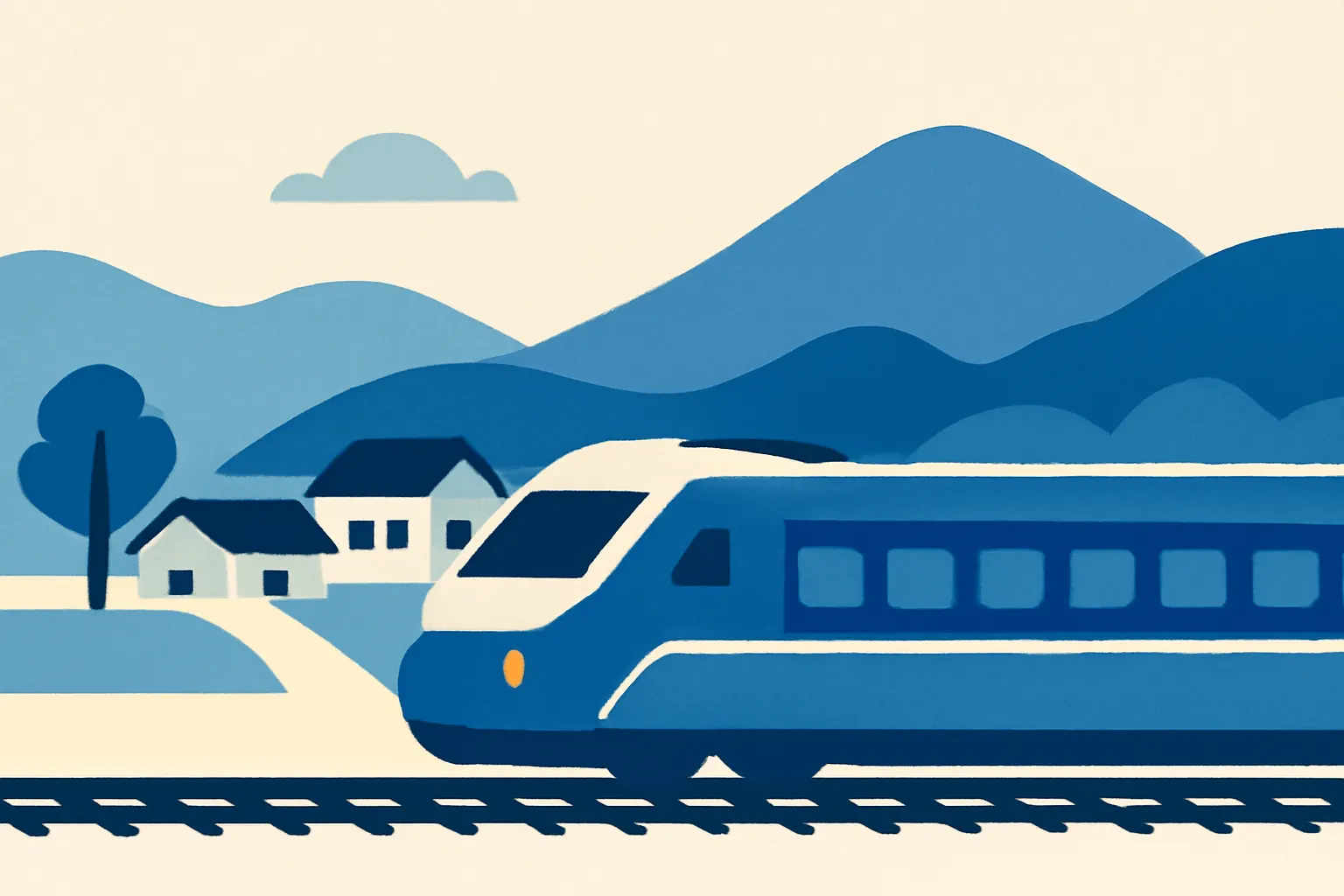
The Korea Herald devotes a feature to the tourist trains that run alongside the KTX, the high-speed link that crosses the country rapidly. According to the newspaper, for some travelers the interest lies not in the destination but in the route: the V-train crosses the mountains at speeds that can drop to 20 kilometers per hour, a pace that allows passengers to observe valleys, streams, granite walls and hillside farms.
The diesel line starts in Yeongju, in North Gyeongsang Province, and reaches Cheoram Station, in Taebaek, Gangwon, along an 87-kilometer route that takes about two and a half hours. Some of the 160 seats face large windows, a detail that makes explicit the choice to design the journey around the landscape rather than speed.
Stops worth stopping for
The newspaper notes that the V-train is locally called the Baekdudaegan Valley Train, after the mountain range that crosses the peninsula. Among the main stops is Buncheon, a nearly abandoned station renovated in the 2010s on the model of a Swiss station, which later became a tourist destination with red roofs and a Christmas-themed village.
The service is not solely for tourism: according to the source, the trains on those tracks are a vital link for the villages near Yangwon and Seungbu stations, in Bonghwa County, which are difficult to reach by car due to the lack of roads. Yangwon is described as the station with the smallest building in the country, while at Seungbu the 15-minute stop allows passengers to buy buckwheat snacks and traditional alcoholic drinks at the station stalls.
Numbers, costs and other lines
From January to September, the Korea Herald writes, the V-train carried more than 61,000 passengers; a ticket for the entire route costs 11,700 won, about $8.70. The train runs once a day with round trips from Thursday to Monday, and a one-hour ride is also available between Buncheon and Cheoram. The source, however, notes two practical limitations: there are no power outlets for charging and no restrooms on board.
The newspaper then mentions the A-train, also known as the Jeongseon Arirang Train, connected to the KTX via Jecheon Station and operating since last May after a two-year pause: it is said to have carried about 18,300 passengers. The 100-kilometer route costs 10,200 won and is also suitable for cyclists, with storage space in one carriage. The East Santa Train, the G-train and the S-train are also mentioned; together they welcomed 350,000 passengers in the same period.
What remains to be verified
The material describes a multifaceted offering but does not clarify some aspects useful to those planning a trip: the service does not indicate whether prices and schedules are seasonal, nor does it specify the conditions for bicycles on the V-train. No data are provided on the comparison between revenue and operating costs of these lines, nor on their economic impact for the villages served. Information on passengers and fares is attributed to the source and has not been independently verified.
