The three new features announced
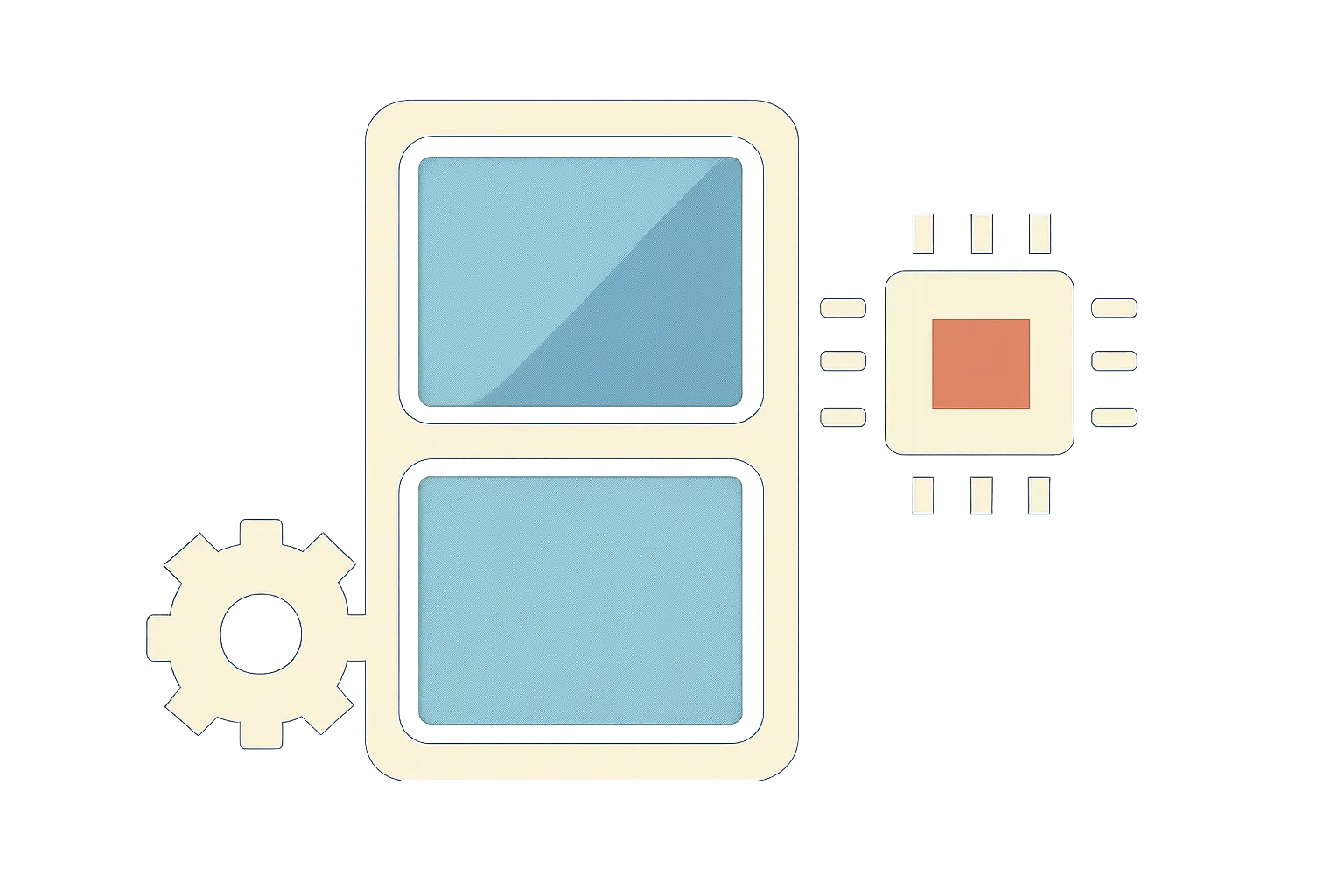
During the Double 11 event dedicated to the new products, Huawei executive director and CEO of the terminal business He Gang illustrated the characteristics of the second Linglong screen mounted on the Mate 90 Pro series. According to a report by IT Home, the new features revolve around three points: a dual-layer OLED architecture, a calibration called AI Pixel that operates screen by screen and pixel by pixel, and cooperation between two chips, Kirin and Zhuque, to control visual rendering.
The most concrete detail concerns the panel structure: compared with a traditional OLED, the second Linglong connects two groups of emissive units in series. From this solution Huawei derives two claimed consequences: at equal brightness, panel lifespan can double, while at equal power consumption, brightness can be pushed higher. These are the manufacturer's claims, not independent measurements.
The division of labor between the two chips
The two chips do not perform the same function: according to the presentation, the Kirin chip handles high-precision calibration when brightness is low, while the Zhuque display chip manages low-power calibration when brightness is high. Huawei describes the transition between the two engines as seamless, with the stated goal of keeping the image sharp and bright.
This, together with pixel-by-pixel calibration, is the potentially most relevant aspect for daily use: if the mechanism works as described, management of color rendering and brightness does not depend on a single component but is distributed. However, it remains to be verified in the field how truly imperceptible the transition between the two engines is and what impact it has on actual power consumption.
Colors beyond the P3 standard, but only on the Max model
The Mate 90 Pro Max variant uses a panel called full-color Linglong, which according to the presentation covers 95% of the BT.2020 color space and 99% of the Pointer space. Huawei quantifies the improvement in color coverage compared with the P3 space at about 30%. He Gang noted that many colors outside the P3 space are not displayed correctly by ordinary smartphones, while the Mate 90 Pro Max screen would be able to show them.
The distinction between models is an element to keep in mind: the broader color characteristics are attributed specifically to the Pro Max, not to the entire series. The material does not indicate prices, availability for other markets, or details on how the greater color coverage is used by everyday content and applications.
