The ruling
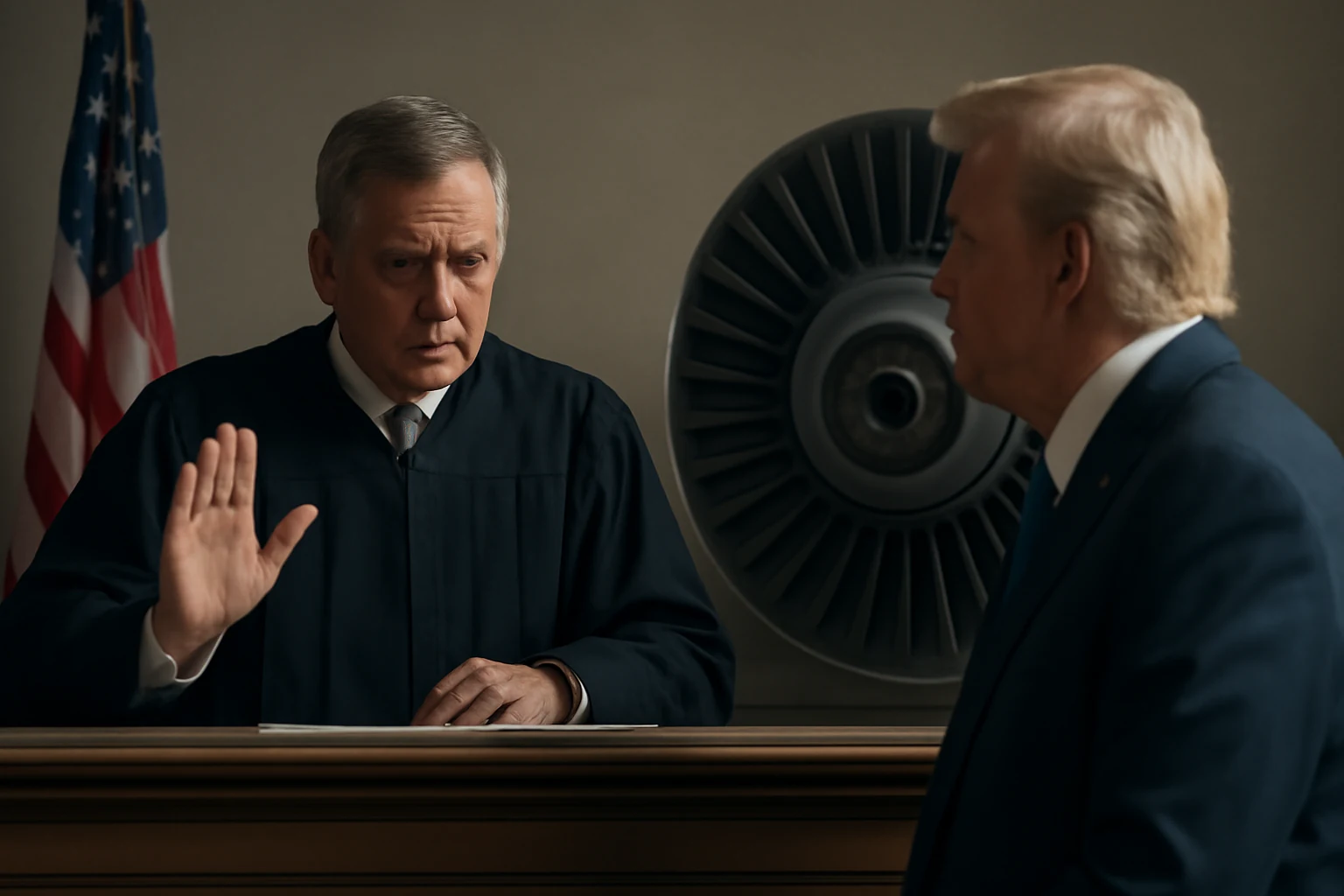
A federal judge has rejected the Trump administration’s claim that the Environmental Protection Agency has the power to unilaterally dismiss lawsuits brought by citizens under the Clean Air Act. According to Ars Technica, District Judge Debra Brown ruled that nothing in the law allows the EPA administrator to dismiss a citizens’ lawsuit on his own initiative, calling the administration’s position an extraordinary reading with no basis in federal law.
The decision allows the lawsuit brought by the NAACP against Elon Musk’s company—now known as SpaceXAI after a merger and formerly xAI—to proceed. The company is accused of pollution linked to the Colossus data center in Memphis, Tennessee, where unauthorized gas turbines had been identified.
The lawsuit and Trump’s request
The NAACP is seeking an injunction requiring the company to use the best available pollution-control technology while operating the turbines, as well as penalties of up to $124,426 per day for each violation. According to the association, without these remedies the turbines risk sharply increasing pollution in already vulnerable neighborhoods, predominantly inhabited by Black communities.
To halt the proceeding, Trump intervened, arguing that the EPA could discard any lawsuit whenever the president deemed he did not want to enforce the Clean Air Act. His argument was that allowing citizens to seek substantial civil penalties against polluting artificial intelligence companies would not serve the public interest, given that companies are trying to make data centers operational as quickly as possible to support his AI plan.
Why the ruling matters
Judge Brown observed that the argument could have given the president the power to block any data center pollution lawsuit, and not only those involving the artificial intelligence sector. The NAACP had argued that the law aims to ensure compliance with air standards and the protection of people, and that the provision granting citizens the right to sue cannot be read as implicit authorization to discard those same lawsuits.
A central point concerns the exception invoked by the administration: the EPA may intervene to close a lawsuit when it is itself acting to enforce the law or to obtain compliance with the rules. In SpaceXAI’s case, however, the administration made clear that it did not intend to sue the company over the alleged violations, a circumstance that the NAACP says makes the citizens’ lawsuit necessary. The judge also noted that the law allows the EPA administrator to be sued for failure to enforce, a sign that Congress anticipated that citizens’ lawsuits would not always align with the agency’s judgment.
Brown also rejected Trump’s constitutional argument, according to which civil penalties paid to the Treasury would be a quintessentially executive power and that, when faced with ambiguous text, courts should avoid a constitutional conflict. The judge wrote that the administration had not identified any ambiguity in the law and that the restrictive interpretation does not allow one to invent a right not provided for by the statute. Laura Thoms of Earthjustice accused the administration of seeking a unilateral and unreviewable veto power over citizens’ lawsuits, calling the decision a rejection of an unprecedented argument. It remains to be seen how the merits of the turbine lawsuit will proceed.
To be verified
The material does not indicate whether the ruling will be appealed or what further developments there will be in the main lawsuit against SpaceXAI. It also does not specify the outcome of any requests for penalties.
